

























On May 28, Salacia Solutions and Nexio Projects hosted the webinar “Navigating SBTi FLAG in agri-food: from complexity to clarity.” The session brought together sustainability, ESG, and data professionals to unpack one of the most complex and increasingly critical topics in climate strategy: SBTi FLAG (Forest, Land and Agriculture).
Together, Emile Catillon (Nexio Projects) and Mathias Laurencier (Salacia) guided participants from high-level context and regulatory urgency to practical implementation challenges and solutions.

Why SBTi FLAG is a game changer
SBTi FLAG focuses on emissions linked to land use, agriculture, and forestry – areas that are often underestimated but essential for reaching global climate targets.
The urgency is clear. The land sector is responsible for approximately 22% of global greenhouse gas emissions and represents a significant share of the mitigation potential required by 2030.
At the same time, pressure on companies is increasing rapidly due to regulations such as EUDR, CSRD, and CSDDD, as well as growing expectations from customers, investors, and value chain partners.
SBTi FLAG is therefore quickly moving from a voluntary initiative to a business-critical requirement in the agri-food sector.
What’s changing: key elements of SBTi FLAG
A central theme in the webinar was understanding what is actually changing and why implementation is so complex.
Companies are now required to work with a combination of sector pathways and commodity-specific pathways. This means multiple methodologies often need to be applied at the same time, depending on the emissions profile of a business.
In addition, The requirements for target setting create an additional workload for companies, as they have become significantly stricter. Companies must cover at least 95% of Scope 1 emissions and 67% of Scope 3 FLAG emissions, while setting both near-term and long-term targets. Offsetting between FLAG and energy or industry emissions is not allowed.
Another major shift lies in how emissions are calculated. Instead of relying on a single emission factor, companies must now split emissions into fossil, land-use change, and land management, often with further granularity across different greenhouse gases and removal mechanisms.
Finally, a single product can contribute to both FLAG and energy or industry targets. This introduces a new level of complexity in carbon accounting and allocation.

Where organizations stand today
The poll results during the session provided a clear picture of the current state of the market.
Participants were evenly split between organizations that have not yet started and those that are preparing. None of the participants had already completed a submission.
This highlights that most companies are still in the early stages of their SBTi FLAG journey.
When looking at motivation, external pressure plays the dominant role. Stakeholders, customers, and regulatory requirements are the primary drivers behind action.
At the same time, the biggest challenges clearly relate to execution. Organizations struggle with emissions calculations, emission factors, internal alignment, and interpreting evolving requirements.
In short, the barrier is not willingness, but the ability to structure and operationalize the work.
Why implementation is so challenging
Several structural challenges explain why progress is difficult.
Standards and methodologies are still evolving, requiring organizations to continuously adapt. Data is often fragmented across value chains and internal systems. There is limited in-house expertise available, and many companies still rely heavily on spreadsheets, which increases the risk of errors and inconsistencies.
As a result, SBTi FLAG should not be seen as a standalone sustainability task, but as a broader transformation involving data, systems, and organizational processes.

From complexity to clarity: what works in practice
The webinar concluded with several practical recommendations.
Organizations that move successfully tend to start early with materiality and scoping, invest in structured and reliable data, and collaborate closely with their value chain. They ensure strong internal alignment across sustainability, procurement, and finance, and move away from spreadsheets toward scalable tools and processes.
Treating SBTi FLAG as a strategic initiative rather than a compliance exercise is what ultimately makes the difference.
The Role of Collaboration
Delivering on SBTi FLAG requires both strategic and technical capabilities.
Nexio Projects supports organizations with strategy, target setting, and validation readiness. Salacia Solutions provides the data infrastructure, calculations, and tooling needed for implementation, including its dedicated FLAG module.
Together, this enables a fully integrated approach from ambition to execution.
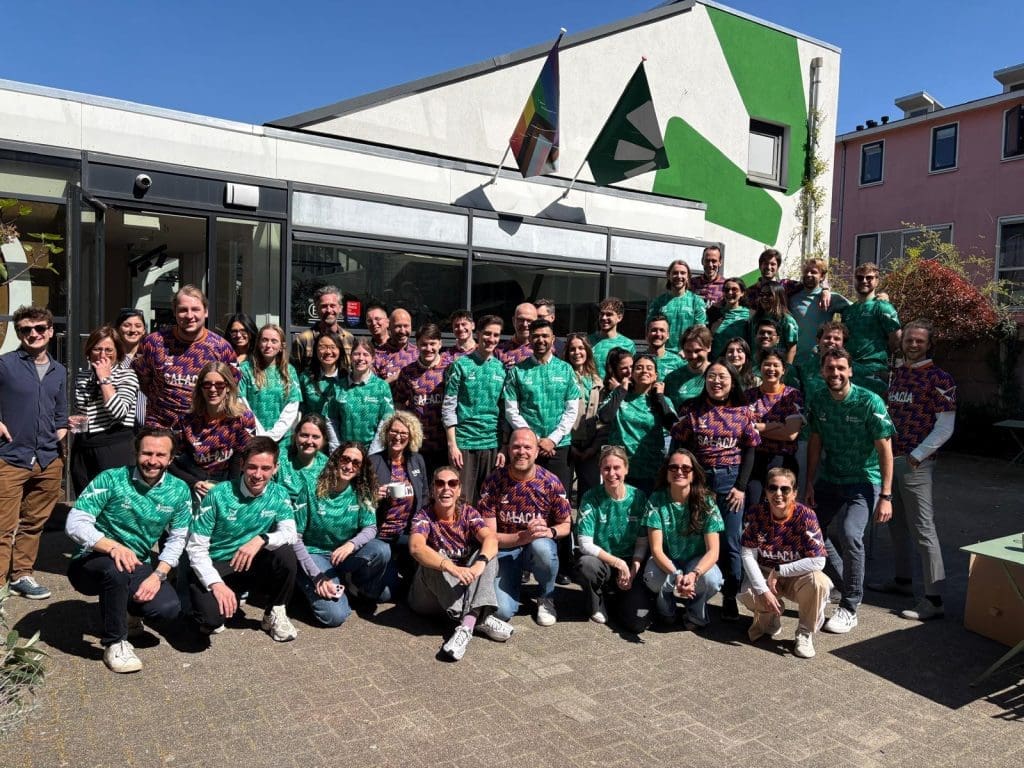
Nexio Projects @ Salacia Solutions together celebrating Earth Day
Next Step: from insight to implementation
For organizations looking to move forward, the next step is to translate insights into action.
A follow-up webinar on June 18 will include a live product demo by Salacia, showing how to structure emissions data, perform compliant calculations, and operationalize SBTi FLAG within an organization.
Watch the webinar recording and explore the whitepaper
If you missed the session or want to revisit the content, the full recording is available here: https://salaciasolutions.live/spotlight/navigating-sbti-flag-in-agri-food-from-complexity-to-clarity-recording/
For a deeper understanding of the methodology, practical challenges, and implementation steps, a dedicated SBTi FLAG whitepaper is also available. This whitepaper provides a comprehensive overview to support organizations in their next steps: https://salaciasolutions.live/spotlight/sbti-flag-for-agri-food-companies/